Introduction
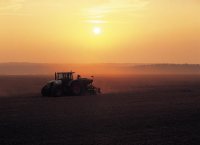
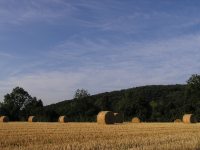
Welcome to Allyoucanteat, the awareness site on climate change and global food supply.
Did you know that climate change will have a direct impact on your diet? Few people imagine how even slight weather changes can affect their food. Many signs point to a catastrophic scenario due to declining agricultural yields as a result of harsher climate conditions. Drought, extreme heat, and natural disasters will all directly affect global food production.
Even a small drop in fruit and vegetable production will create a worldwide vitamin deficiency with measurable consequences—hundreds of thousands of deaths, according to a study by *The Lancet*, a leading medical journal in the UK. Furthermore, mineral deficiencies will also have negative impacts on a significant portion of the world’s population.
As usual, emerging countries will suffer the most, as they rely on agriculture for survival. While increasing yields should meet global demand, climate change will severely limit expansion possibilities for an agricultural industry already at its limits. Worse still, experts predict even lower yields than today in the next 30 years.
However, beyond agriculture, it is the oceans that might make humanity feel the impact of overfishing and climate change. Millions of people depend on marine resources for survival, but rising temperatures and overfishing that disregards reproductive cycles threaten entire populations.
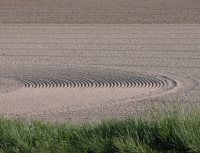
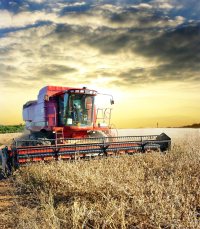
Simultaneously, weather disruptions—heavy rains, droughts—will significantly and unpredictably impact soil productivity. Entire harvests could be lost more frequently, and yields could be significantly reduced. Water shortages will affect more and more people, and wheat, rice, and corn production is expected to decline in the coming decades.
Yield decline is already happening: over the past 30 years, maize yields have dropped by nearly 4%, and wheat by 6%. If this trend continues and worsens, the consequences for the world’s population and food supply will be disastrous. Lower yields will coincide with a growing population, pushing prices up and triggering large-scale humanitarian crises. At this point, these are not mere conjectures but realities already observed. A report by Oxfam highlights extreme increases in basic food prices between 2008 and 2012 as a direct result of unfavorable weather conditions.
These directly observable effects will be compounded by less visible consequences of climate change. For example, pollination—essential for flowering plants’ reproduction—depends on pollinating insects, which are declining globally. This is one of the most well-studied effects of climate change and particularly alarms experts. The impact is not just on ornamental flowers in bouquets but on the reproduction of plants crucial for global food supply.
Not all effects of climate change are known; many unexpected and unpredictable consequences arise from isolated phenomena interacting and amplifying each other.